

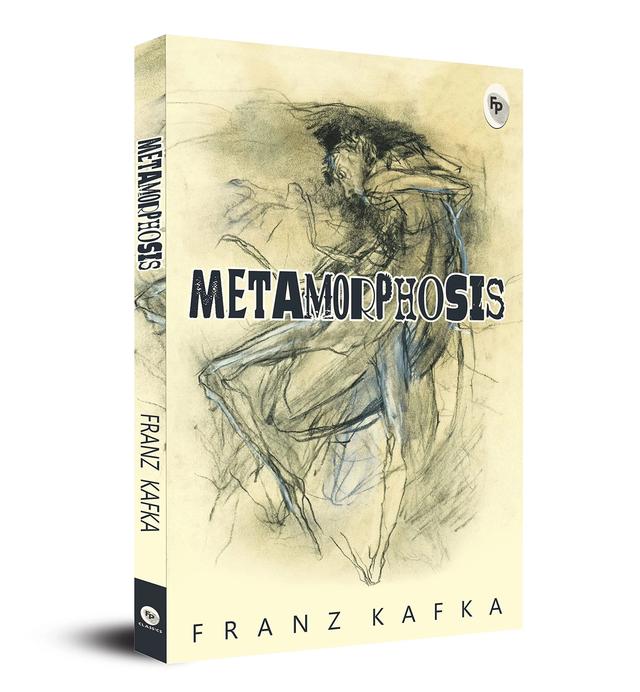
Book Review by Medha Hisaria
The Metamorphosis, a timeless novella authored by Kafka, is the story of a young man who transformed overnight into a monstrous vermin, becomes an object of dishonour and shame to his family, and a quintessentially alienated man. Metamorphosis is one of the most widely read and influential works of twentieth-century fiction.
Existentialism is a philosophical theory that emphasizes the person's existence determining their development through acts of the will. Existentialist work focuses on the importance of the individual often denying the "existence of objective values." Existentialism is focused on choice and the idea that people must exist before they can have any values. Existentialism explores choice as one of the defining aspects of human existence, which made humans different from the species. As Samsa is stripped of that choice and independence, he becomes non-human, ergo a monstrous vermin.
The novella is heavily rooted in understandings of psychology. The process of metamorphosis is a subconscious desire to escape the pressure of being the breadwinner of this family. The protagonist's name, Gregor Samsa, is derived from the psychology word Gregariousness which means the desire to be with one's kind. And the word Samsa is derived from the Czech word sám, which means aloof.
Metamorphosis revolves around several themes like alienation in the modern-day lives as seen through Samsa. Alienation is written on his body, and there is a feeling of isolation and absurdism at its core. The next theme is mind and body disconnect, which is explored in comparison to the modern world. Gregor turns into a monstrous vermin, which strips him of a human body, but his mind, his thoughts are like that of a human. He experiences pain, worry and empathy. This disconnect can be observed in contemporary times as well.
The novella also deals with family imbalance where Samsa as the breadwinner, suffers at the hands of his family. Samsa says, "If I didn't hold back for my parent's sake, I would've quit ages ago". Before the metamorphosis, he worked hard for his family to pay off bills without leaving time for himself, leading to his loss of identity and individuality. The irony here is the most inhumane character is the most humane. Here, Kafka depicts the dangers of working for others without considering one's own needs. This is where the impersonal and dehumanizing structure of class relations becomes even more noticeable.
The use of the monstrous vermin is exceptionally absurd and horrific, describing the current state of society, which doesn't make any sense. Kafka describes absurdism and existential dread through a creature of disgust and horror, a cockroach, thus turning Samsa into a vermin-symbolizing dehumanization.
I would rate the book a good 4.5/5, because of its timelessness, themes and symbols, the existential depths and the psychological layers it provides. Although the plot is fresh and intriguing, the language could have been better. As W.H. Auden wrote, "Kafka is important to us because his predicament is the predicament of modern man".
Medha is a Master's Graduate, who can find her way to any book store in Bangalore. Existential crisis, coffee and dogs are a few things that keep her alive. She is a sharp reader and a think tank.
Instagram: @medhahisaria